
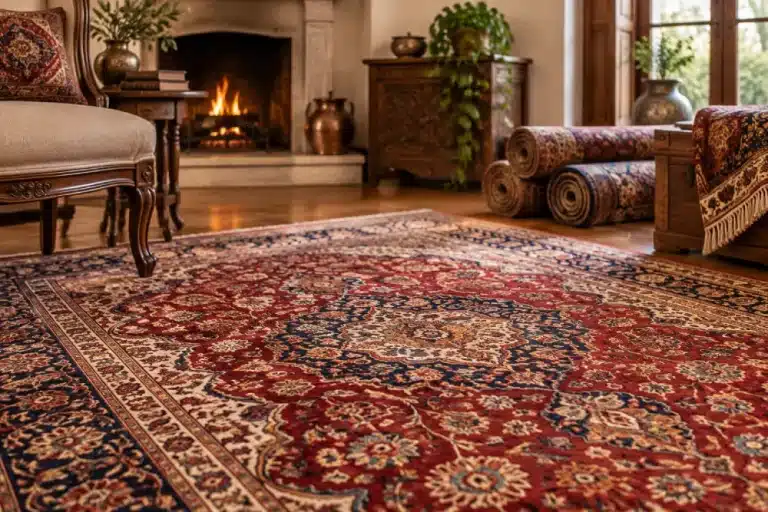
A handmade Persian rug is more than a decorative piece for a home. It represents centuries of craftsmanship, artistic tradition, and careful material selection. Unlike many modern floor coverings designed for short-term use, authentic Persian carpets are created with techniques that prioritize strength, beauty, and longevity. With proper care, many handmade Persian rugs can last for several generations, and some examples have remained in excellent condition for hundreds of years.
When homeowners ask how long do Persian rugs last, the answer depends on several factors, including the quality of materials, weaving methods, amount of foot traffic, maintenance routine, and environmental conditions. A well-made rug can become a family heirloom, while a poorly maintained one may experience damage much earlier than expected.
Understanding the handmade Persian rug lifespan helps buyers recognize the value behind these pieces and make informed decisions when selecting, cleaning, storing, and protecting their investment.
How Long Does a Handmade Persian Rug Last?
The lifespan of a handmade Persian rug can range from 50 years to more than 150 years when it is made with high-quality materials and maintained correctly. Some century old Persian rugs still display remarkable colors, detailed patterns, and strong construction because they were created using traditional weaving techniques and durable natural fibers.
The average lifespan of Persian rugs varies depending on their origin, construction quality, and daily use. A wool Persian rug placed in a residential area with moderate traffic may remain beautiful for many decades, while a silk rug displayed in a low-traffic setting can preserve its delicate details for generations.
The durability of Persian rugs comes from the combination of craftsmanship and material quality. Traditional artisans carefully create each piece using methods that focus on structural integrity. The relationship between the warp and weft, knot density, fiber selection, and dye quality all influence how long the rug can withstand use.
Why Handmade Persian Rugs Last for Generations
The reason many handmade Persian rugs become family treasures is the attention given to every stage of production. Unlike factory-made products, each rug is individually woven by skilled artisans who follow traditional Persian rug weaving techniques passed down through generations.
Several qualities contribute to the exceptional lifespan of handmade rugs:
- Hand-knotted construction: Hand-knotted rugs contain thousands or even millions of individual knots, creating a strong structure that can handle years of use.
- Natural materials: Wool, silk, and other natural fibers provide strength, flexibility, and a softer aging process compared with many synthetic materials.
- Traditional weaving methods: Skilled weaving creates a balanced foundation where the fibers work together instead of relying only on surface appearance.
- Natural dyes: Natural dyes often age gracefully, developing richer tones rather than fading quickly like some chemical dyes.
A high-quality handmade rug is designed to improve with age. Over time, the fibers soften, colors develop character, and minor signs of use can add to the rug’s authenticity and charm.
Factors That Affect the Lifespan of a Persian Rug
Although handmade Persian rugs are known for their durability, several factors influence how many years do Persian rugs last in real-world conditions. Even the finest rug can suffer premature damage if it is exposed to harsh conditions or improper maintenance.
One of the most important factors is the quality of construction. The materials used in the rug and the skill of the weaver determine its ability to resist wear. High-quality hand-knotted Persian rugs generally have greater durability because their knots are securely connected to the foundation.
The type of fiber also plays an important role. Wool Persian rugs are among the most durable options because wool fibers naturally resist crushing and recover well from pressure. Silk Persian rugs offer exceptional beauty and fine detail but require more careful placement because silk is more delicate.
Other important factors affecting Persian rug durability include:
- Foot traffic: Rugs placed in busy hallways, entryways, and living areas experience faster wear compared with rugs used in bedrooms or formal spaces.
- Sun exposure: Continuous direct sunlight can gradually fade colors, especially when the rug is exposed for long periods.
- Moisture and humidity: Excess moisture can weaken fibers, encourage mold growth, and damage the rug foundation.
- Cleaning methods: Harsh chemicals, excessive water, and incorrect techniques can permanently affect fibers and dyes.
- Storage conditions: Poor storage practices can lead to creasing, insect damage, and deterioration over time.
The foundation of the rug also matters. Many traditional rugs use a cotton foundation Persian rug structure because cotton provides stability and supports the weaving process. The quality of the foundation helps determine how well the rug maintains its shape after years of use.
A rug’s origin and craftsmanship can also affect its value and lifespan. For example, some regions are known for specific Persian rug weaving techniques that produce exceptionally dense and durable designs. Understanding these differences helps buyers identify higher-quality pieces.
Handmade Persian Rugs vs Machine-Made Rugs: Which Lasts Longer?
The difference between handmade and machine-made rugs is significant when comparing long-term durability. While machine-made rugs can provide affordable flooring solutions, they are generally created with different priorities, focusing on speed, consistency, and lower production costs.
Handmade rugs vs synthetic rugs often reveals a major difference in construction. Handmade rugs typically use natural fibers and traditional methods, while many synthetic rugs rely on manufactured materials designed for temporary use.
A machine made rug lifespan is usually shorter than that of a well-crafted handmade Persian rug. Many machine-produced rugs may last several years to a decade or more depending on quality, but they generally cannot match the longevity of traditional handmade pieces.
The main differences include:
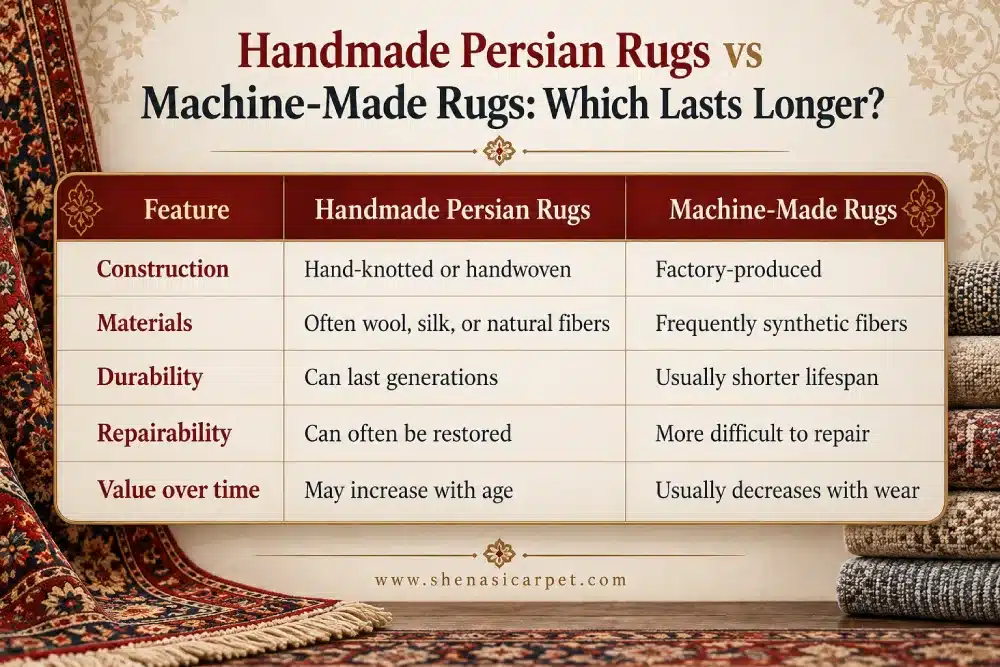
The handmade rug durability advantage comes from the craftsmanship behind the product. A skilled artisan creates a rug carefully, paying attention to knot placement, fiber quality, and pattern accuracy.
For homeowners looking for long lasting area rugs, handmade Persian rugs remain one of the strongest options available. They are not simply floor coverings; they are pieces of craftsmanship that can maintain beauty and function for decades.
When choosing a new rug, some buyers may search for a place to buy Carpet options for their home, but understanding the difference between temporary flooring products and traditional handmade pieces can help make a more valuable long-term decision.
How to Make Your Handmade Persian Rug Last Longer
Proper maintenance is essential for protecting a handmade Persian rug and extending its useful life. Even the highest-quality rug requires regular attention to maintain its structure, appearance, and value.
A consistent care routine should focus on preventing damage before it occurs. Simple habits such as regular cleaning, reducing direct sunlight exposure, and using proper support underneath the rug can significantly improve its lifespan.
Important maintenance practices include:
- Vacuuming Persian rugs carefully: Regular vacuuming removes dust and particles that can slowly damage fibers. Avoid aggressive vacuum settings that may pull on delicate areas.
- Using a rug pad: A quality rug pad provides cushioning, reduces slipping, and helps minimize friction between the rug and floor.
- Rotating the rug: Changing the rug position every few months helps distribute wear evenly in areas with regular foot traffic.
- Professional cleaning: Professional rug specialists understand natural fibers, dyes, and traditional construction methods better than general carpet cleaners.
Learning how to care for Persian rugs properly also means knowing when professional assistance is needed. Deep cleaning should not be performed using ordinary household carpet products because some chemicals can weaken fibers or cause color bleeding.
A trusted carpet store Vancouver customers rely on may also provide guidance on selecting suitable care products and understanding the requirements of different rug materials.
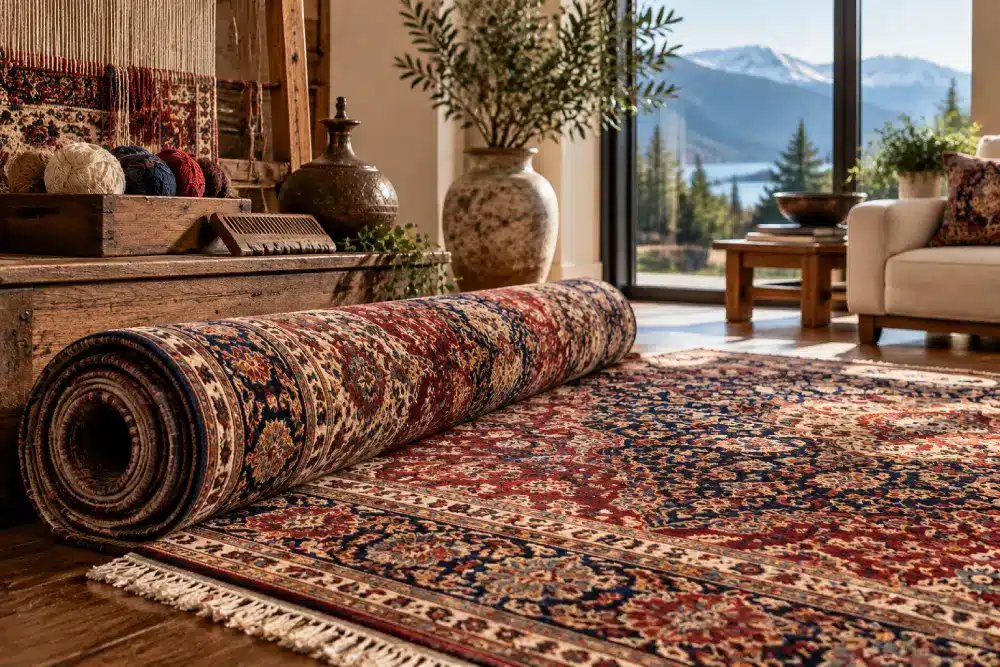
Proper storage is another important part of preservation. When a rug is not being used for an extended period, proper rug storage can prevent unnecessary damage. The rug should be professionally cleaned, completely dried, rolled with the pile facing inward, wrapped with breathable material, and stored in a dry environment away from extreme temperature changes.
Regular Persian rug maintenance protects both the appearance and structural integrity of the rug. Small issues such as loose edges, minor tears, or weakened areas should be addressed early before they develop into larger problems.
Common Mistakes That Shorten a Persian Rug’s Lifespan
Even durable handmade Persian rugs can experience serious damage when they are exposed to incorrect care practices. Many problems occur not because of poor rug quality, but because owners unknowingly use methods that harm delicate fibers and natural dyes.
One of the most common mistakes is using improper cleaning products. Household detergents, strong chemicals, and incorrect stain treatments may permanently damage the rug’s colors and texture.
Other mistakes that reduce Persian rug lifespan include:
- Placing rugs in areas with excessive moisture or unstable humidity levels.
- Allowing spills to remain untreated for long periods.
- Using strong vacuum brushes that pull or weaken fibers.
- Storing rugs while they are dirty or damp.
- Ignoring early signs of damage such as fraying edges or loose knots.
Heavy furniture can also create pressure points over time. Using protective pads beneath furniture legs and occasionally changing furniture placement can help prevent permanent indentations.
Another common issue is choosing the wrong cleaning provider. Persian rug cleaning requires specialized knowledge because handmade rugs are different from standard wall-to-wall carpets. A professional cleaner understands how natural fibers react to moisture, temperature, and cleaning solutions.
For older or valuable pieces, Persian rug restoration may be necessary. Skilled restoration experts can repair damaged sections while preserving the original craftsmanship. Many owners of antique Persian rugs choose restoration because the antique Persian rug durability can often be recovered with proper techniques.
For damaged rugs requiring specialized attention, services such as Persian Carpet repair Vancouver can help restore structural issues and extend the useful life of valuable handmade pieces.
Can a Damaged Persian Rug Be Restored?
Yes, many damaged Persian rugs can be restored depending on the condition of the fibers, foundation, and overall construction. Professional restoration may include repairing edges, rebuilding damaged sections, replacing weakened areas, and carefully matching original colors and patterns.
Because handmade rugs are created individually, experienced specialists can often repair them without reducing their artistic value. In many cases, restoration allows an older rug to continue serving for another generation.
What damages Persian rugs the most?
The biggest threats to Persian rugs include excessive moisture, harsh cleaning chemicals, direct sunlight, insects, and heavy untreated wear. Poor maintenance habits can shorten the lifespan of even high-quality handmade rugs.
How often should a Persian rug be cleaned?
Most Persian rugs benefit from professional cleaning every 3 to 5 years, although the schedule depends on usage, location, and exposure to dirt. Homes with pets, children, or high foot traffic may require more frequent cleaning.
Regular vacuuming, immediate spill treatment, and professional inspections help maintain the rug’s condition between deep cleanings.
Why Quality Matters When Choosing a Persian Rug
The quality of a Persian rug determines not only its appearance but also its ability to survive decades of use. Buyers should consider factors such as knot density, fiber quality, weaving method, dye techniques, and overall construction.
A genuine handmade rug represents a combination of artistic skill and practical durability. Unlike a temporary modern carpet designed mainly for current trends, a traditional Persian rug can become a lasting piece that connects generations.
Choosing authentic Persian carpets means investing in craftsmanship that has proven its value over centuries. With proper maintenance, careful cleaning, and responsible storage, handmade Persian rugs remain among the most durable and meaningful floor coverings available.