
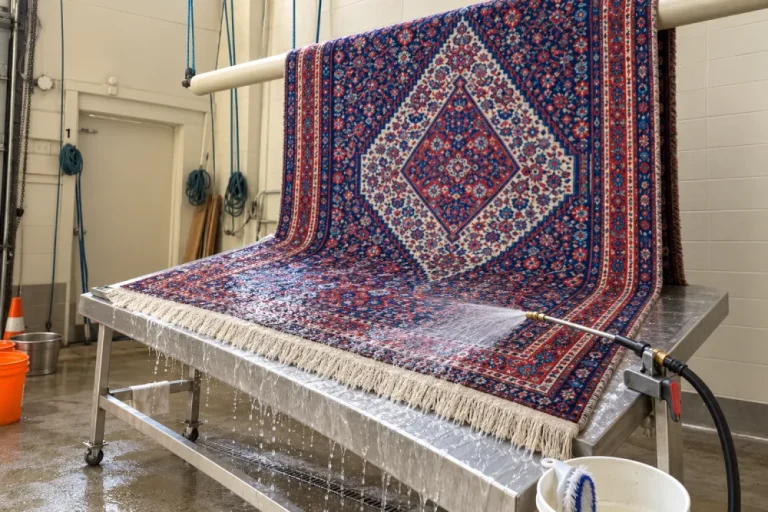
Frequent washing can shorten the lifespan of an Iranian carpet when it involves unnecessary soaking, unsuitable detergents, aggressive handling, or inadequate drying. However, appropriate cleaning removes contamination that would otherwise contribute to deterioration. The objective is to clean according to the rug’s condition, rather than follow an inflexible washing schedule.
An Iranian carpet is a textile with several interacting components: pile, foundation, dyes, edges, and sometimes previous repairs. Effective Persian rug care considers all of them. A sound wool rug in a busy household and a fragile silk heirloom should not receive identical treatment simply because both are Persian.
Can You Wash a Persian Rug Too Often?
Yes. Washing a rug that only needs routine maintenance exposes it to avoidable handling and moisture. Nevertheless, frequent Persian rug washing is not automatically harmful when contamination genuinely requires treatment and the method suits the textile.
The question “does washing damage Persian rugs” therefore needs a qualified answer. Damage depends on the rug’s stability, cleaning chemistry, mechanical action, and drying arrangements. Counting washes alone cannot establish whether a carpet has been cared for properly.
There is no universal answer to how often should you wash a Persian rug. Consider foot traffic, pets, spills, soil accumulation, and previous cleaning results. An annual condition review can help owners decide whether washing is necessary without committing to an annual wash.
Keep a simple record of cleaning dates and the reasons for treatment. If repeated washing addresses the same persistent mark, request a diagnosis rather than another identical service.
Routine Cleaning and Full Washing Are Different
Routine cleaning removes loose dirt through appropriate vacuuming and careful spill management. Full Persian rug washing involves a more substantial treatment of accumulated contamination. Regular maintenance can reduce the need for full washing, but it cannot always remove material embedded deep within the weave.
Why Cleaning Method and Rug Condition Matter
A pre-wash inspection should identify fibre composition, unstable colours, brittle areas, and previous repairs. Professional Persian rug cleaning should follow these findings. A rug’s survival through an earlier wash does not guarantee that its current dyes or weakened areas will tolerate the same treatment again.
How Can Improper Washing Damage a Persian Rug?
Improper Iranian carpet washing can affect appearance and structural integrity. A carpet may look brighter immediately after treatment while developing roughness, uneven tension, or loose edges once dry. These changes require investigation rather than an assumption that any visible improvement proves the process was suitable.
A competent hand-knotted rug cleaning assessment considers the entire textile. The pile may be wool, while the foundation contains cotton or silk. Different materials, repairs, and worn sections can respond differently to wetting and handling.
Before authorizing treatment, ask the cleaner to explain the proposed products, soil-removal method, and drying process. Request photographs of existing defects and clear identification of areas where results are uncertain. This creates a useful condition record for future decisions.
When comparing carpet cleaning Vancouver services, establish whether they assess removable handmade rugs individually. Experience with installed synthetic carpeting does not, by itself, demonstrate competence with delicate Persian textiles.
The broader question “does washing damage rugs” also depends on construction. A method suitable for a washable synthetic mat may be inappropriate for a handmade rug with unstable dyes. There is no single process that safely suits every carpet.
Dye Bleeding and Colour Migration
Persian rug colour bleeding occurs when dye moves from its original yarn into surrounding areas. Colourfastness testing helps identify instability, although it cannot predict every reaction. Temperature, cleaning chemistry, previous treatments, and moisture exposure can influence dye movement during washing and drying.
Fibre Damage From Harsh Products and Scrubbing
Strong products and vigorous brushing can roughen wool fibres or disturb the pile. Excessive heat and agitation may contribute to felting in susceptible wool. Persian rug cleaning damage can therefore involve texture changes even when the pattern initially appears intact.
Incomplete Drying and Trapped Moisture
A dry surface does not establish that the foundation is dry. Prolonged dampness can encourage odours, microbial growth, and further dye migration. Controlled drying must address the whole textile, with suitable support to limit shrinkage and distortion rather than simply heating the pile.
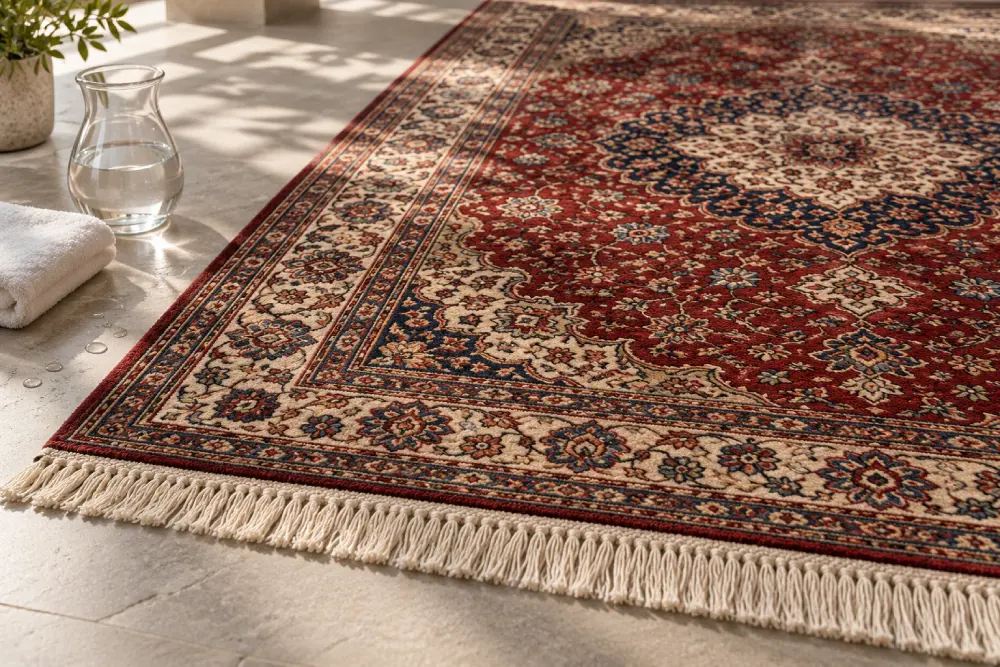
Can Leaving a Persian Rug Dirty Also Shorten Its Life?
Avoiding all washing is not a reliable preservation strategy. Dirt can settle below the visible surface, where ordinary foot traffic repeatedly presses it against the yarns. The Canadian Conservation Institute describes embedded dust and dirt as abrasive material that wears away the rug’s structure.
This explains why a carpet can appear reasonably presentable while still needing attention. A patterned field may conceal grit, while furniture hides neglected areas. Owners should assess the whole rug rather than judge cleanliness from its most visible section.
Spills introduce a different problem. Surface blotting may remove much of the liquid without resolving contamination that has reached deeper layers. Repeatedly perfuming an affected area or cleaning its surface may leave the underlying issue untouched.
The sensible balance is to prevent unnecessary frequent rug washing while addressing genuine contamination promptly. Ask what needs removing, whether routine maintenance is sufficient, and what risks accompany the proposed treatment. Protecting Persian rug lifespan requires both restraint and timely intervention.
For a recurring household problem, also address its source. Entry mats, suitable placement, and changes to pet access may reduce the need for repeated corrective cleaning.
Do Wool, Silk, and Antique Rugs Need Different Care?
Yes. Fibre type, age, construction, and condition affect cleaning decisions. Two hand-knotted rugs with similar designs may need very different care because their materials and histories differ.
Wool Persian rug cleaning should account for the pile and foundation, not merely the visible fibres. A resilient surface can conceal fragile stitching or earlier repairs. The cleaner should identify these differences before choosing a process.
Silk Persian rug cleaning requires particular caution because changes in surface texture and lustre can be conspicuous. Silk fibres should not be treated as though they have the same tolerances as wool or synthetic yarns. Identification matters, especially when a rug’s composition is uncertain.
Antique rugs also require individual assessment. Age alone does not prove that washing is unsafe, but brittleness, worn areas, historical repairs, and cultural significance may justify advice from a textile conservator.
Likewise, modern carpet and rugs vary widely in construction; contemporary appearance does not establish washability. The Carpet and Rug Institute recommends following relevant care instructions or using professional assistance for Persian rugs, with specialist attention for heirlooms.
When considering persian rugs vancouver by shenasi carpet, ask about fibre identification and written care guidance before selecting a piece. Understanding maintenance requirements helps match the rug to its intended room and everyday use.
Should a Damaged Persian Rug Be Repaired Before Washing?
Sometimes. A loose end or opening may need stabilization before cleaning, while another repair may be better completed after soil has been removed. Rug repair before cleaning is therefore a sequencing decision, not an absolute rule.
Fringes often extend from the foundation threads, making their condition more than a cosmetic concern. Damaged fringes, frayed edges, and exposed end knots should be examined before wet handling or mechanical soil removal.
A weakened foundation deserves particular attention. Supporting a compromised area may be necessary before the rug can be moved safely. Conversely, extensive permanent repairs may require a clean textile so that the repairer can assess its condition accurately.
Before commissioning carpet repair in Vancouver, ask for a written explanation of which work is urgent and which can wait. Photographs and a phased estimate make the proposed sequence easier to understand.
A request for Persian rug repair Vancouver or rug repair North Vancouver should describe the defect, not just the desired appearance. Include photographs of the front, back, edges, and affected area so the repairer can advise whether an in-person inspection is needed.
When Cleaning Alone Cannot Resolve Existing Damage
Washing cannot replace missing knots, rebuild broken foundation threads, or reverse established fibre loss. Persian rug repair, including rug fringe repair, addresses structural defects. Rug restoration may involve additional work, but cleaning should never be presented as a guaranteed remedy for every faded, worn, or damaged area.
How Can You Tell Whether Your Rug Needs Washing?
Assess changes over time rather than relying on a rigid calendar. Compare the rug with earlier photographs and examine areas that receive different levels of traffic. Look for contamination alongside structural changes; the two require different responses.
A mark that remains after cleaning is not necessarily evidence that the rug needs another wash. Discolouration may reflect fading, wear, or earlier dye movement. Accurate identification prevents repeated treatment that offers little benefit.
Useful reasons to arrange an assessment include:
- Persistent soil accumulation despite appropriate routine vacuuming.
- A spill or pet accident that may have penetrated beyond the pile.
- Odour that returns after the area appears dry.
- Sticky residue, unusual stiffness, or signs of previous cleaning products.
- Loose edges, damaged ends, or visible changes around an old repair.
None of these observations alone establishes the correct cleaning method. Odour, for example, calls for investigation of moisture and contamination rather than automatic deodorizing.
When arranging Persian rug cleaning Vancouver or Persian rug cleaning North Vancouver, describe what changed and when. Mention previous washing, home treatments, and any known water exposure. Professional rug cleaning advice becomes more useful when the cleaner receives a clear history.
If a care note reads “Doubting the principles of the carpet”, request a specific explanation before approving work. The assessment should identify an actual concern, such as uncertain construction, unstable dyes, or deteriorated foundation threads.
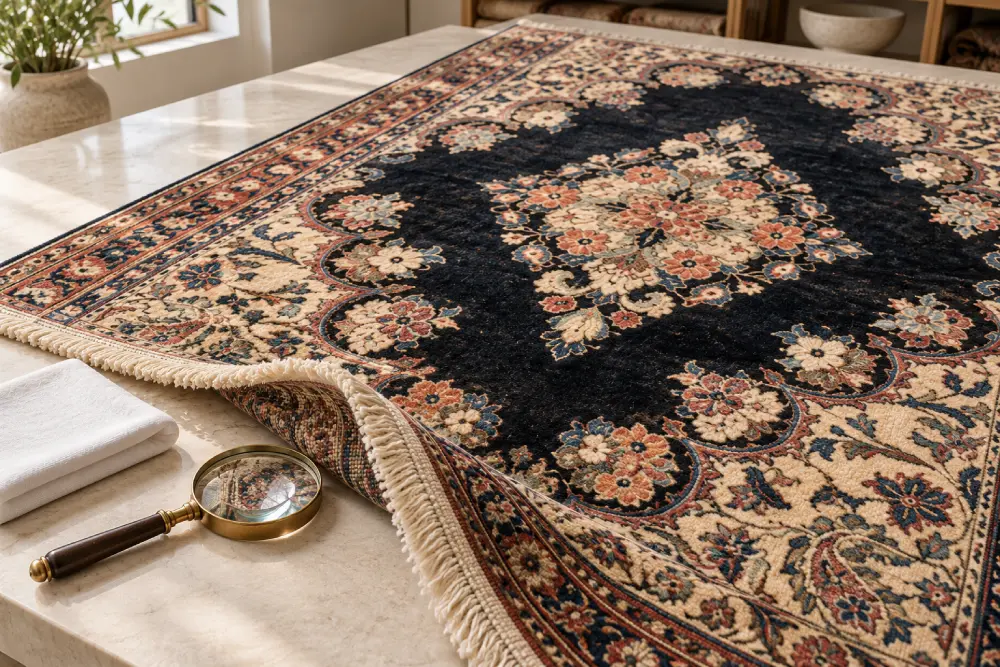
Important Points for Washing Carpets at Home
For a valuable Iranian carpet, home care should usually focus on maintenance and immediate spill containment. Full washing requires more than access to water: suitable products, safe handling, thorough soil removal, and reliable drying all matter.
The practical answer to how to clean a rug without damaging it begins with identifying its limits. A care label, purchase record, or specialist assessment can clarify whether wet treatment is appropriate. A small successful spot test does not prove that full immersion is safe.
Follow these precautions between professional assessments:
- Vacuum sound areas gently, using suitable suction and avoiding loose threads and fringes.
- Blot fresh spills with a clean white absorbent cloth; avoid vigorous rubbing.
- Avoid bleach, laundry detergent, and improvised chemical mixtures.
- Do not saturate an unidentified, fragile, or valuable rug.
- Stop treatment if colour transfers or the texture changes.
- Keep damp rugs unrolled and arrange prompt specialist help after substantial wetting.
These measures support maintenance; they are not instructions for washing every Persian rug at home. Wool rugs that are handmade, valuable, or of uncertain construction warrant particular caution before deep cleaning.
Rug stain removal also has limits. Repeated applications of different products can complicate later treatment. Record anything already applied and share that information with the cleaner.
If you plan to buy carpet in vancouver, discuss the intended location, household traffic, and realistic maintenance arrangements before purchasing. Choosing a suitable rug can prevent recurring care problems.
Frequent washing becomes a threat when treatment is unnecessary or poorly matched to the textile. A more protective approach combines regular observation, gentle maintenance, prompt attention to contamination, and washing only when the rug’s condition justifies it.