
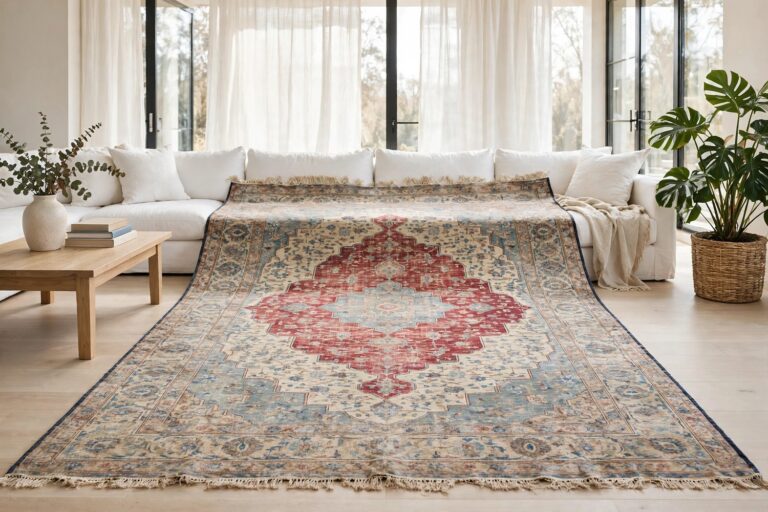
An old Persian rug is rarely just a rug. It might have come with a house, crossed an ocean in a family move, or spent decades under a coffee table. The question most owners ask sooner or later is the same: is this antique Persian rug actually worth something — and am I looking after it properly? This guide answers both.
What Makes a Persian Rug Antique — or Vintage?
In the rug trade, the two words are generally used by age. A rug is usually called an antique Persian rug once it is around a hundred years old, and a vintage Persian rug once it is roughly twenty to a hundred years old. A rug in between is sometimes called semi-antique. The line is not a law; what matters more is whether the age can be shown in the dyes, the foundation, and the wear.
Age alone does not make a rug valuable. A hundred-year-old rug that was mass-produced or badly damaged can be worth less than a well-made vintage piece in beautiful condition. And a rug does not become antique simply by being old: an authentic Persian rug has to be hand-knotted, made the traditional way. The same two words can describe a family treasure and a worn-out floor covering — the difference is in the details below.
How to Tell If Your Antique Persian Rug Is Valuable
Persian rug value is never one thing. An expert weighs several factors together, and a weakness in one can be balanced by strength in another.
Age and Authenticity
Start with whether you have a real Persian rug — genuinely old and genuinely hand-knotted. Look at the back: on a hand-knotted rug the pattern shows on the reverse and the knots are slightly uneven, while a machine-made back looks flat and uniform. Natural dyes are another clue: older rugs were coloured with plant and mineral dyes, which age into soft, uneven tones. Age is the hardest factor to judge without experience, and it is the first thing a certified rug appraisal will establish.
Where It Comes From
Origin is one of the biggest drivers of value. Persian rugs are named for the town or region where they were woven — Tabriz, Isfahan, Kashan, Qom, Nain, Heriz, and Baluch among them — and each place has its own designs, colours, and knotting style. A fine Isfahan is judged by different standards than a sturdy tribal Heriz. Knowing where your rug comes from is half the valuation, so learn the types of Iranian carpets first.
Materials: Wool, Silk, and Dyes
What a rug is made of sets its ceiling. Wool is the workhorse — durable, warm, and right for a floor rug that is actually used. Silk is rarer and finer: a silk pile, or a silk foundation with a wool pile, takes far more work and usually commands a higher price, but it is also more delicate. Natural dyes age gracefully into the mellow tones collectors call patina.
Knot Density and Craftsmanship
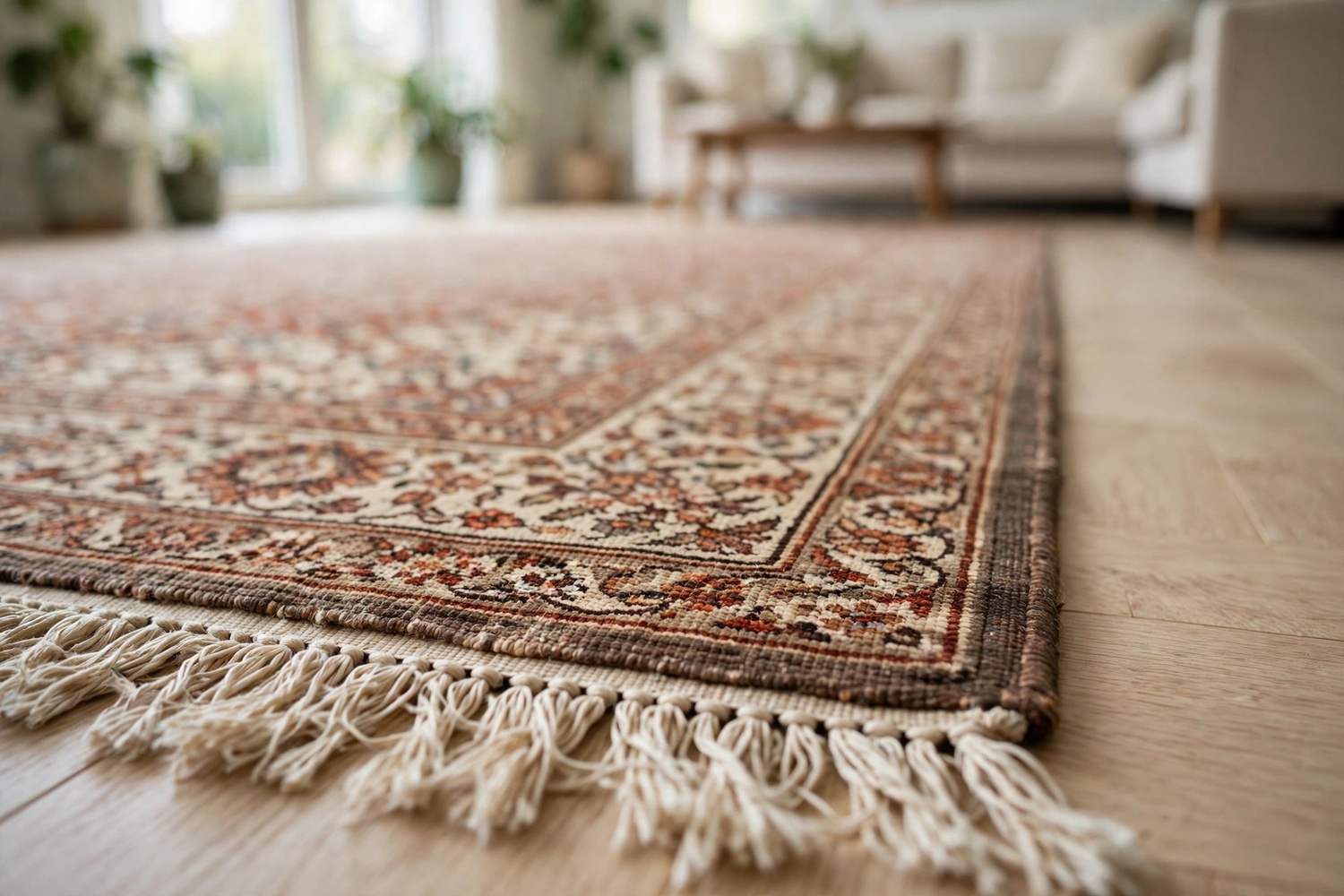
Feel the knots. A higher knot count typically means finer work and higher value — the weaver spent more hours on the same square inch, and the design can hold finer detail. Judge it by the back: finer, tighter knots mean a more detailed pattern. But density is not everything. A bold tribal rug with a lower knot count can be worth more than a finely knotted but dull commercial piece.
Condition: Wear, Damage, and Repairs
Condition is where most old rugs lose value — and honest wear is different from damage. Even, gentle wear from decades of footsteps is normal; collectors call it patina. What hurts value is uneven damage: holes, bare patches where the foundation shows, stains that have set, moth damage, and fringe that is missing or unravelled. Fringe runs along the top and bottom ends of a rug, and on an old piece it often wears first. A well-done repair that matches the original knotting and colours barely affects value; a crude patch can reduce it.
Design, Size, and Rarity
Finally, the design itself. Some patterns are common and some are rare; a well-balanced medallion, a distinctive tribal motif, or an unusual colour combination can lift a rug above similar pieces. Rarity is the hardest factor to judge at home — and the reason two rugs of the same age and origin can be worth very different amounts.
What a Rug Appraisal Tells You
If you want a real answer to “how much is a Persian rug worth?”, you need an appraisal — not a guess from a photo or a price seen online. A proper appraisal is an in-person examination of the materials, technique, knot count, dye type, origin, and age, followed by a certified written report. At Shenasi Carpet, all appraisals are carried out personally by the founder, Hossein Shenasi, and the report is certified for insurance, resale, or estate planning.
An appraisal is worth getting for insurance, for resale, or simply for knowing. If your rug was damaged, stolen, or lost, a certified report proves what it was worth — and most home insurance policies require a professional written appraisal for rugs above a certain value. Most standard appraisals are completed within two to five business days, but a certified report always needs an in-person evaluation — photos alone are not enough. One tip: have your rug professionally cleaned first, because clean fibres show their true colour and condition.
How to Care for an Antique Persian Rug
Antique rugs survive because someone looked after them — and the most common damage comes from well-meaning cleaning at home.
Cleaning: Hand Wash Only
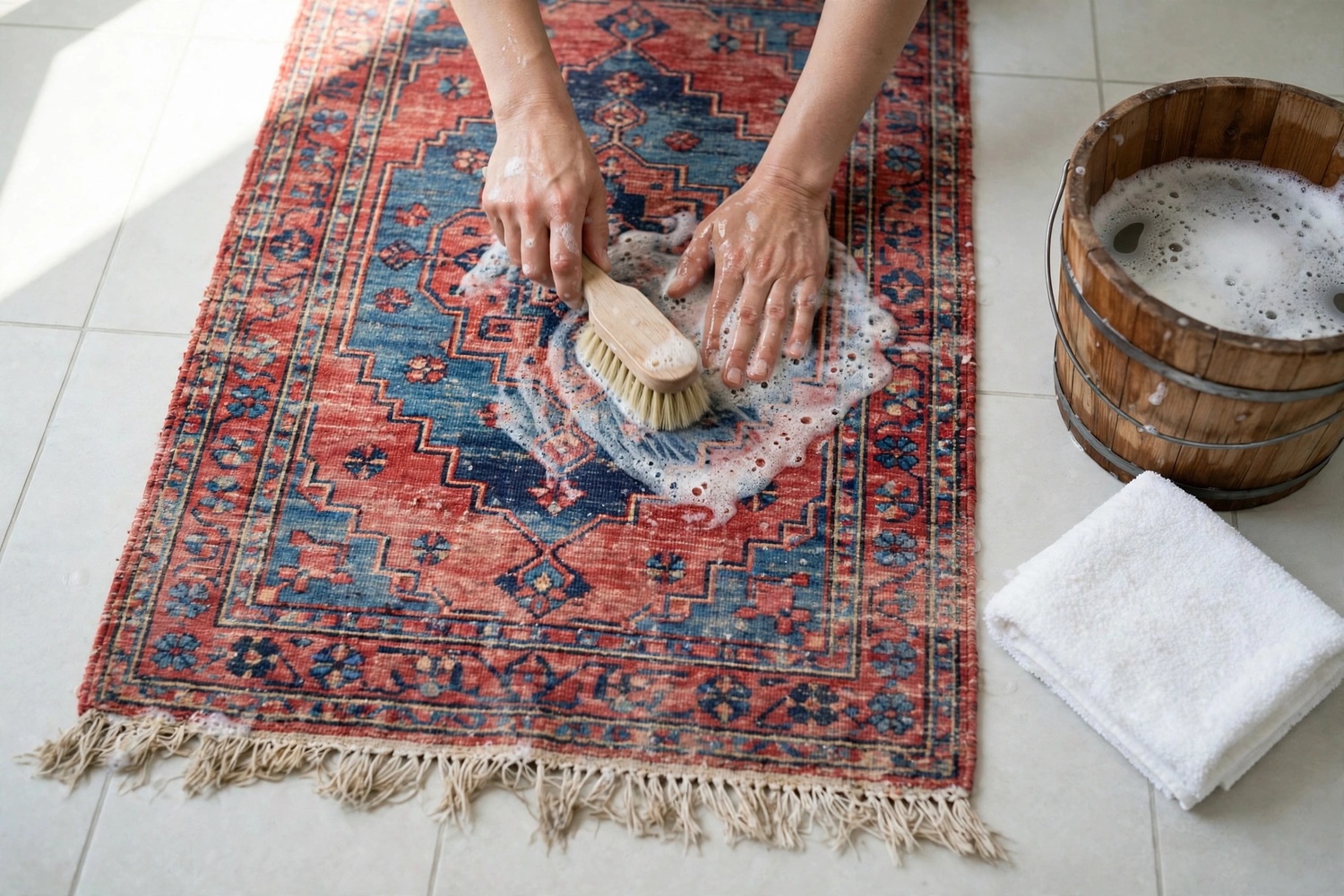
An antique Persian rug should never go through a machine, a steam cleaner, or a do-it-yourself shampoo: the fibres are older, the dyes often natural, and the foundation may already be fragile. The right way is a hand wash by people who work with these rugs every day: inspection, dusting, pre-treatment, a manual wash and hand washing, and a slow dry. At Shenasi Carpet, cleaning follows a nine-step process with eco-friendly, non-toxic solutions, and pickup and delivery across Metro Vancouver is free. If you are looking for professional carpet cleaning in North Vancouver for an old rug, choose a cleaner that inspects it first. At home, vacuum slowly on suction-only; a beater bar can be too rough for hand-knotted pile.
Light, Air, and Rotation
Direct sunlight is the quiet enemy of an old rug: it fades natural dyes unevenly, and a rug that sits half in the sun will age in two different colours. Draw the curtains in the strongest sun. Rotate the rug so wear spreads evenly, and let the room breathe — damp, still air encourages mildew.
Storage: Roll, Don’t Fold
If an antique rug has to be stored, clean it first and roll it — never fold it, because a fold can crack the foundation along the crease. Roll it pile-in, wrap it in a breathable cover rather than sealed plastic, and keep it somewhere cool and dry. Check a stored rug every month or two.
Watch for Moths
Moths are the other quiet enemy: their larvae eat wool and silk in dark, undisturbed places — under furniture, along the edges, and in stored rugs. The first signs are thin patches, small irregular holes, and sandy grains on the floor beneath the rug. If you find them, act quickly: isolate the rug, vacuum both sides, and have it washed. Our guide to carpet moths in Persian rugs covers the signs and removal steps in full.
Repair or Leave the Patina Alone?
Not every flaw in an antique rug needs fixing. Even wear, a softened pile, and gently faded colours are patina — the record of a rug’s life — and removing them can reduce its character and its value. What needs fixing is damage that will get worse: a spreading hole, an exposed foundation, or fringe coming away. Left alone, those problems grow; repaired early, they stop.
Repair on an antique is reweaving by hand: a restorer matches the wool or silk, re-knots the missing pile, and rebuilds the area so the pattern reads again. It is slow work, always assessed in person. If your rug needs it, Persian rug repair and restoration starts with an inspection, so the repair matches the rug’s original knotting, colours, and structure.
Fringe deserves its own mention: it sits at the ends of the rug and wears first, and loose or missing fringe should be fixed before it pulls the edge apart — see our page on fringe repair for what that involves.
Buying an Antique Persian Rug
If you are buying rather than inheriting, the same factors apply — age, origin, materials, knots, condition, and design — and you should check them before you pay, not after. Ask the seller where the rug comes from, how old it is, and whether it has been repaired; look at the back for even hand-knotting; check the fringe at both ends. A reputable seller will welcome those questions. That is how you tell authentic Persian rugs from convincing copies: the story checks out in the knots, the dyes, and the wear.
Antique and vintage Persian rugs are especially popular among collectors because each piece carries historical value and unique characteristics, and a good shop will have a range to compare side by side. If you are looking at antique Persian rugs in the shop, take your time: compare a few pieces, ask for an appraisal on the one you like, and buy the rug, not the story. A smaller handmade rug may be more accessible, while a large or highly detailed piece can represent a significant investment.
Frequently Asked Questions
How old does a rug have to be to count as antique?
Generally, around a hundred years. Rugs roughly twenty to a hundred years old are usually called vintage, and rugs in between are sometimes called semi-antique. The line is a convention, not a law — what matters is whether the age can be shown.
How much is my antique Persian rug worth?
It depends on age, origin, materials, knot density, condition, design, and rarity together — no single factor sets the price. The only reliable answer is a certified appraisal, which examines the rug in person and gives you a written report for insurance, resale, or estate planning.
Can an antique rug be cleaned?
Yes — by hand, by people who work with old rugs: inspection, dusting, pre-treatment, hand washing, and a slow dry. Never machine-wash it, never steam it at home, and never use a beater-bar vacuum on it. A professional clean before an appraisal also helps, because clean fibres show their true colour and condition.
I inherited an old Persian rug — where do I start?
Start with a look at the back: check the knots, the foundation, and the fringe at both ends. Then have it cleaned by hand, and get an appraisal so you know what you have. Cleaning first, valuation second — the appraisal is more accurate on a clean rug. If it has holes, bare patches, or moth damage, ask about repair at the same time.
Final Word
An antique Persian rug rewards the owner who pays attention. Learn how old it is, where it comes from, and what it is made of; keep it clean, dry, and out of harsh sun; check the back every few months; and get it appraised so its value is on record. Most value is not lost in a single accident — it is lost slowly, by rugs that sat in the dark, went uncleaned, or were repaired too late.