
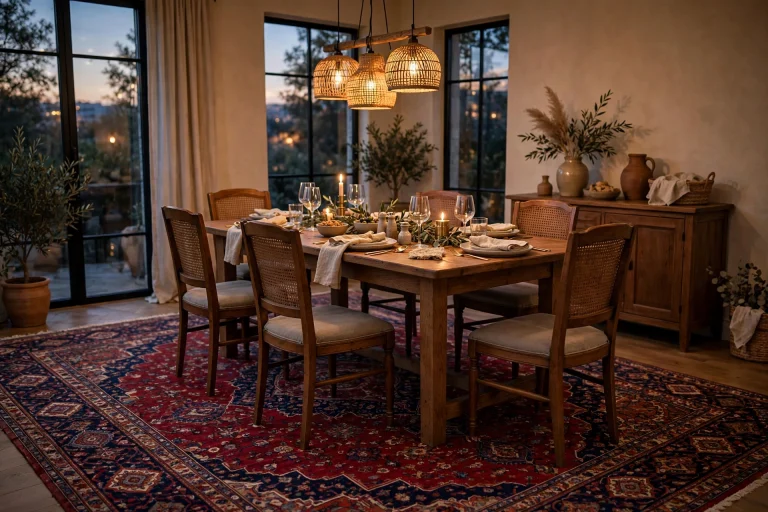
A dining room rug works harder than a rug almost anywhere else in the house. It has to look beautiful under the table, stay put while chairs are pulled in and out several times a day, and survive dropped cutlery, spilled glasses, and crumbs after a family dinner. Choosing a Persian rug for a dining room in North Vancouver is therefore less about picking the prettiest piece on display and more about matching size, shape, pile, and pattern to the way your household actually eats.
Start With the Table, Not the Rug
The most common dining room mistake is buying a rug that fits the room but not the table. A rug that ends just past the table legs looks fine while everyone is seated, but the moment a chair is pulled out, its back legs drop off the edge. Chairs then rock on the rug’s border, the rug bunches, and the whole arrangement feels awkward.
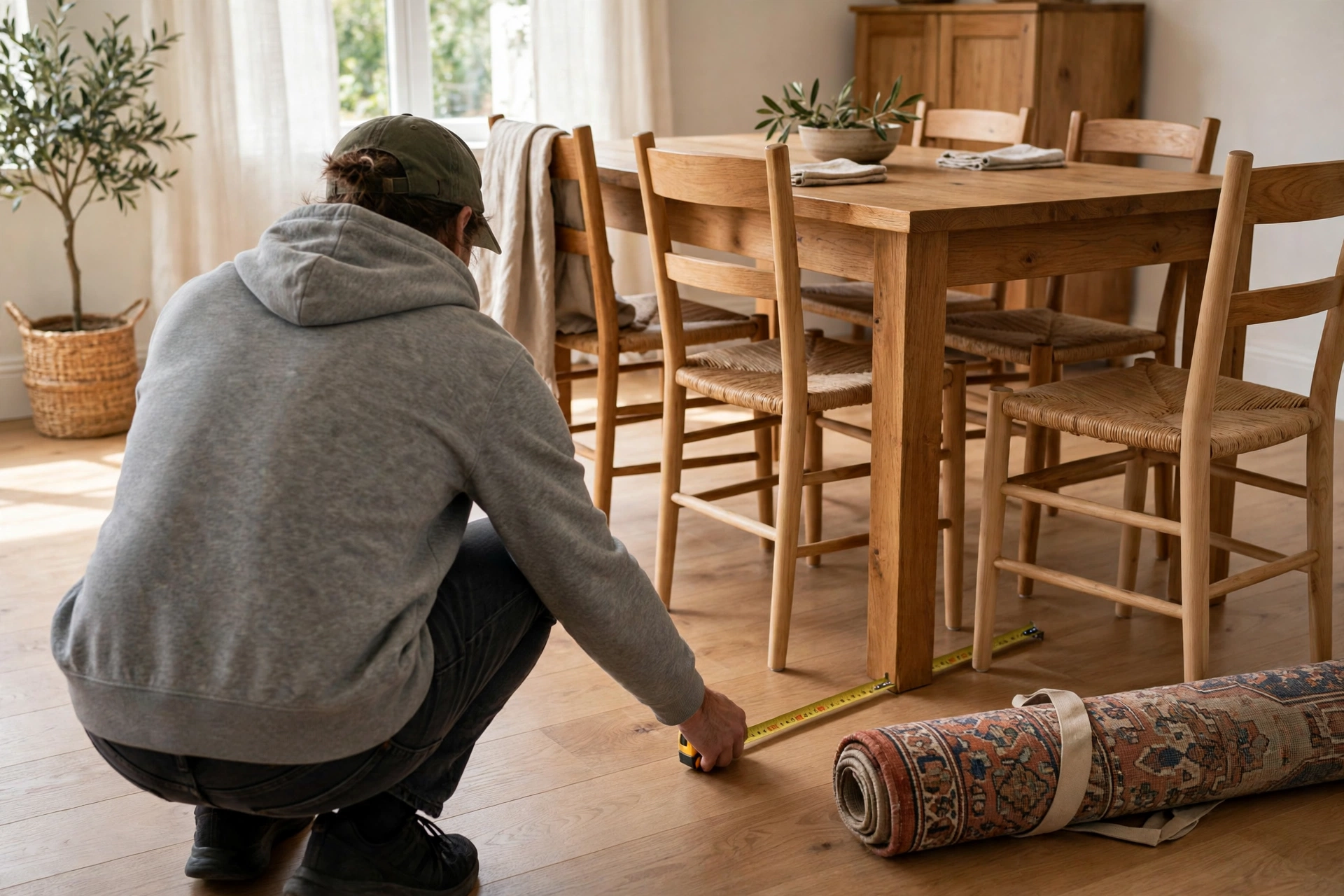
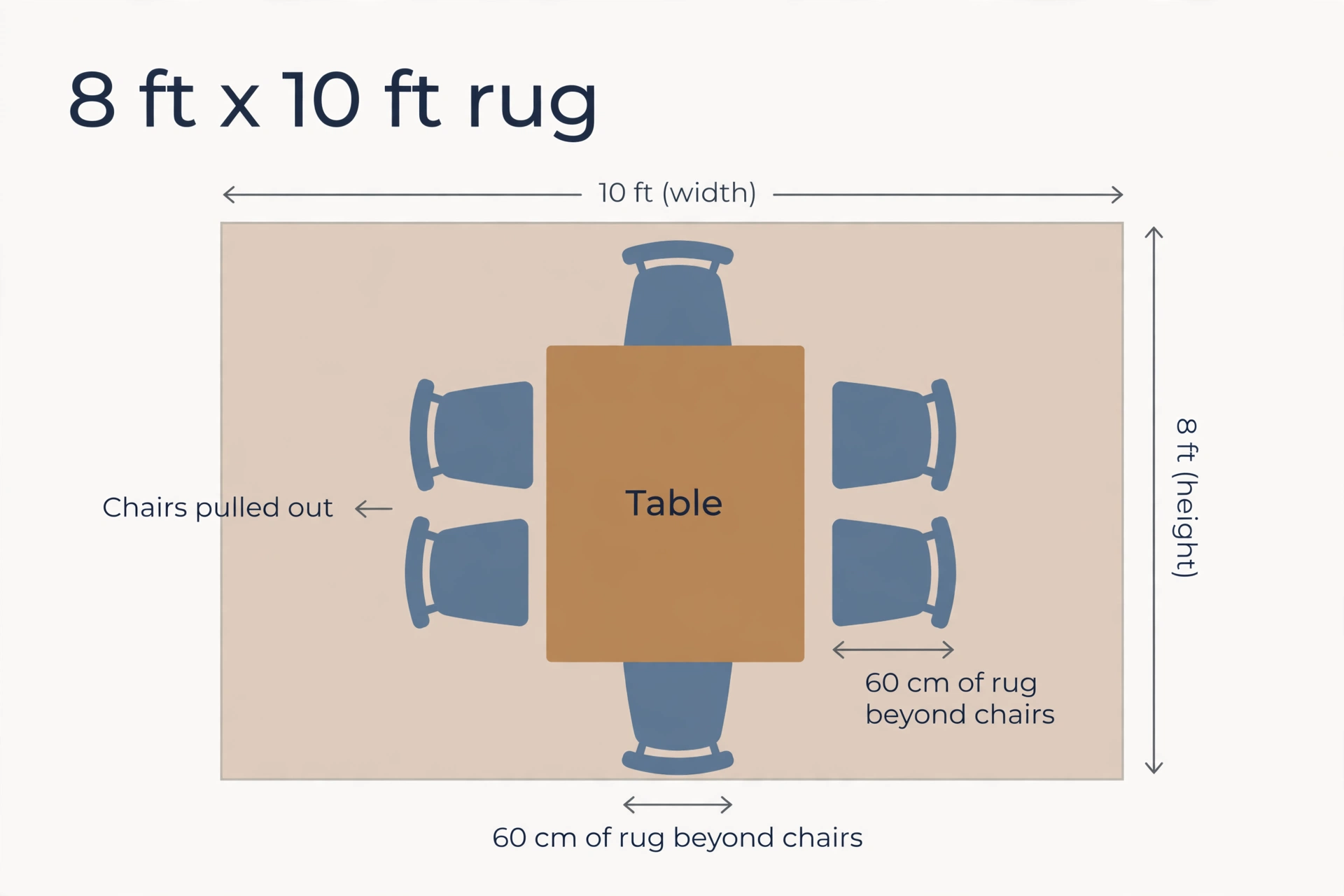
Measure in three steps. First, measure the table itself, length and width. Second, pull the chairs out to the position someone would actually sit in — not pushed neatly under the table — and measure the full footprint, chair back to chair back. Third, add breathing room around that footprint. A useful rule of thumb is about 60 centimetres (roughly two feet) of rug beyond the pulled-out chairs on every side, so chairs stay fully on the rug even when they move. In a smaller North Vancouver dining nook, that last step often decides the size: the rug you need is usually larger than the one you first imagined.
Also measure the room, including door swings and the path from the kitchen. If your table extends for guests, measure it both ways and size for the setting you use most often.
Dining Room Rug Sizes at a Glance
The table below gives starting points, not rules. Persian rugs are handmade, so exact dimensions vary from piece to piece, and your own measurements should always decide. Use it to narrow the search, then confirm against your table-and-chairs footprint. For a fuller discussion of standard dimensions, see Shenasi Carpet’s guide to common sizes of Persian rugs.
| Dining setup | Typical table size | Footprint with chairs pulled out | Rug size to consider | Shape note |
|---|---|---|---|---|
| Small round table, 4 chairs | About 90–110 cm across | About 180–210 cm across | 8 ft round, or about 6 ft x 9 ft rectangular | Round suits a round table best; rectangular works if the room is rectangular |
| Square table, 4 chairs | About 90–110 cm square | About 180–210 cm square | About 6 ft x 9 ft, or 8 ft square | Square or rectangular; leave equal rug visible on all sides |
| Rectangular table, 6 chairs | About 150–180 cm long | About 210–240 cm long | About 8 ft x 10 ft | Rectangular, following the table’s direction |
| Rectangular table, 8 chairs | About 200–240 cm long | About 260–300 cm long | About 9 ft x 12 ft | Rectangular; the most common large dining size |
| Large or extending table, 10+ chairs | 240 cm or longer | 300 cm or longer | 10 ft x 14 ft and above | Rectangular; confirm the extended length before choosing |
Shape: Follow the Table
Shape is simpler than size, because the table usually answers it. A rectangular table calls for a rectangular rug, laid in the same direction, so the rug echoes the furniture rather than fighting it. A round table works with a round rug, which keeps the same amount of rug visible around every chair, or with a square rug if the room itself is square and you prefer crisper lines.
A runner or narrow rug does not work well under a dining table: chairs need a single, stable surface. A rug with an all-over pattern is also more forgiving than one with a strong central medallion, since it looks balanced even if the table sits slightly off-centre.
Pile: The Practical Heart of a Dining Rug
Pile — the height and density of the rug’s surface — matters more in a dining room than almost anywhere else. Chair legs press into it, crumbs settle into it, and spills reach it first. A very thick, plush pile feels luxurious in a bedroom, but under a dining table it can make chairs harder to slide, trap food more readily, and show pressure marks where chairs habitually sit.
For most dining rooms, a low to medium pile is the practical choice. Chairs move more easily, crumbs are simpler to pick up, and the surface is easier to vacuum. That does not mean the rug must be flat or thin — many traditional Persian rugs have a firm, medium pile that is both beautiful and hard-wearing. When you look at a rug in person, run your hand across it and picture that surface after a year of daily meals.
Material works hand in hand with pile. Wool is the workhorse of the dining room: it is naturally resilient, bounces back from chair pressure well, and handles everyday family use. Silk has an unmatched sheen and fine detail, but it is more delicate, better suited to a formal dining room used for special occasions than to a breakfast table used three times a day. Mixed wool-and-silk pieces sit between the two. Shenasi Carpet’s carpet shop lets you filter by pile material, a useful way to narrow a large collection to the fibres that fit your household.
Colour and Pattern: Beauty That Forgives
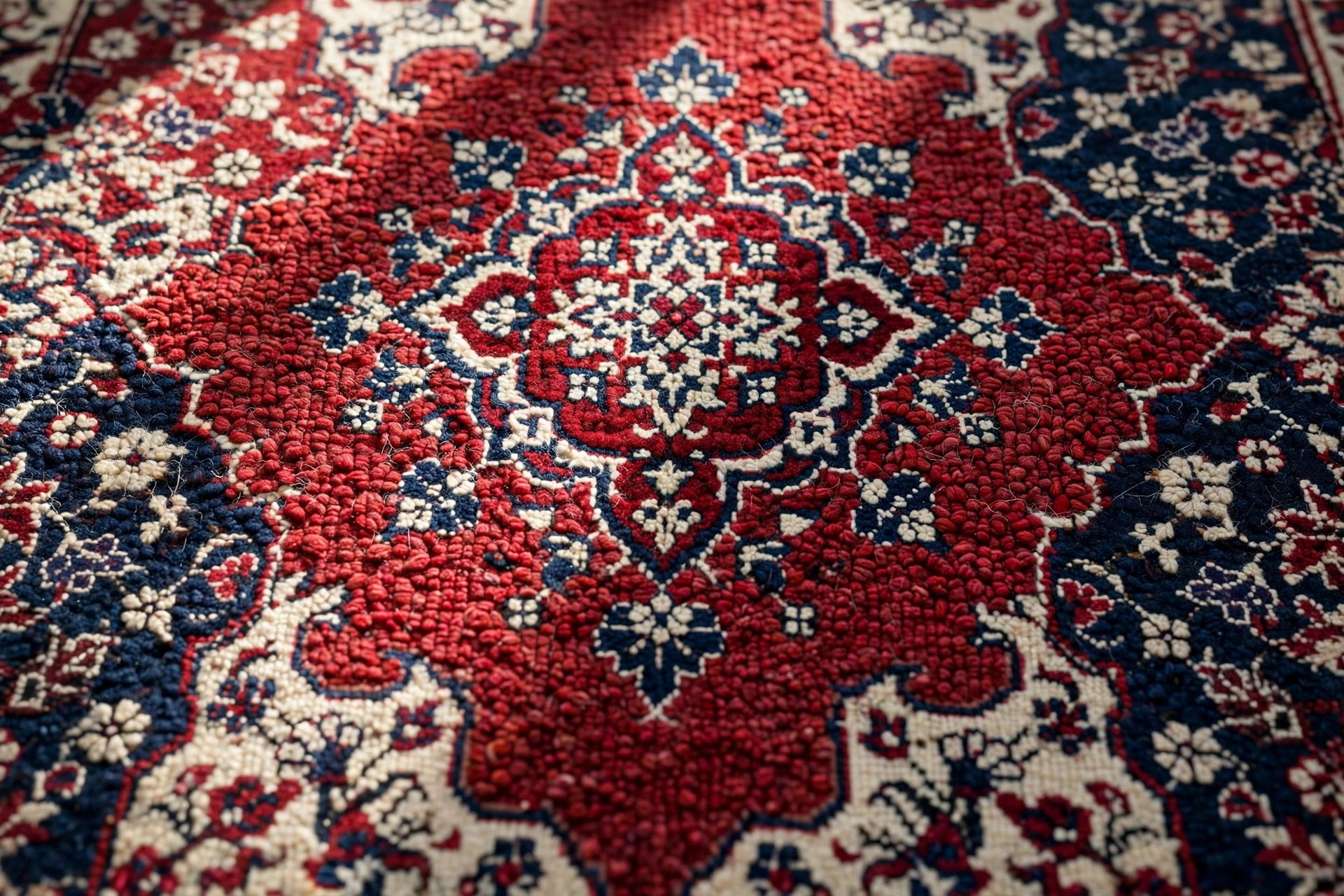
A dining room is not a showroom, and the most forgiving rug is rarely the palest one. Light, plain fields show every splash and crumb, while a busier pattern — a traditional floral field, a geometric tribal design, a medallion with plenty of detail — breaks up marks and keeps the rug looking composed between cleanings. That is not an excuse to ignore spills, but it is a realistic concession to daily life, especially in a household with children or frequent guests.
Darker and mid-toned backgrounds — deep reds, blues, and earthy tones common in traditional Persian weaving — tend to be the most forgiving, while still offering enormous variety. If your heart is set on a lighter rug, it can absolutely work, but go in with your eyes open: it will need more prompt attention to spills and more frequent professional care.
Colour also has to live with the room, not just the table. A rug that looks perfect in a showroom’s lighting can read differently at home, especially on a grey North Vancouver winter afternoon, and the border colour often matters as much as the field — it is the part you see most when the table is set.
Underlay: The Unseen Part That Protects Both Rug and Floor
An underlay is easy to overlook and hard to regret. On the hard floors common in dining rooms — hardwood, tile, and laminate — a rug without one can creep every time a chair moves, bunching at the edges and wearing unevenly. A good non-slip underlay holds the rug flat, cushions it against chair pressure, and helps protect the floor beneath from grit trapped under the rug.
Choose an underlay sized to the rug, or slightly smaller so it does not peek out at the edges, and make sure it suits your floor type. If you are unsure which type fits, ask in the showroom — Shenasi Carpet’s underlay range covers several non-slip options.
Spills, Chairs, and Everyday Care
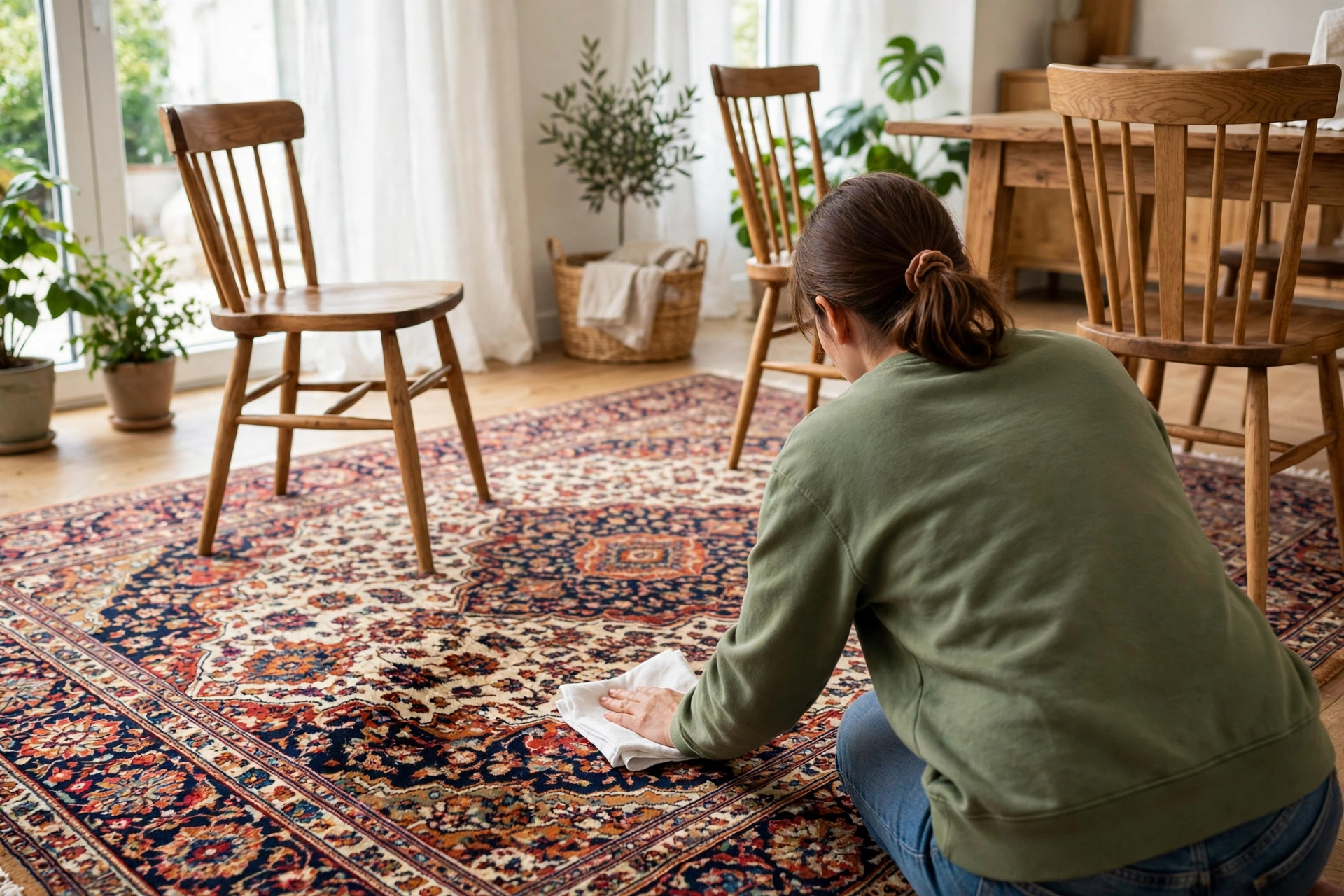
No dining rug stays spotless, and the goal is prompt, gentle action rather than perfection. When something spills, blot it with a clean, dry cloth rather than rubbing, which can push a stain deeper into the pile. Work from the outside of the spill inward, and deal with it sooner rather than later; most everyday spills are far easier to lift when fresh. Avoid harsh household cleaners and bleach on a handmade rug, and test any cleaning product in an inconspicuous corner first.
For serious spills — red wine, tomato sauce, grease — or a stain that does not lift with blotting, professional cleaning is the safer step. Handmade rugs have natural dyes and fibres that react differently from machine-made carpet, and a cleaner experienced with Persian rugs will know how to treat the piece without damaging it. Shenasi Carpet’s guide to how to care for handwoven rugs covers home maintenance, stain treatment, and when to hand the job to a professional, and it is worth reading before the first accident rather than after.
Chair care matters as well: felt pads on chair feet reduce pressure marks and help chairs glide more smoothly.
Seeing Rugs in Person Before You Decide
Photographs flatten a Persian rug. They rarely show pile depth, the way light moves across silk highlights, or whether a colour reads warm or cool in person. Take your measurements with you — table dimensions, pulled-out chair footprint, room dimensions, and a photo of the room — and ask to see rugs at the size you need, not just the size on display.
At Shenasi Carpet’s North Vancouver showroom, you can see, touch, and compare rugs in person, the most reliable way to judge texture, weight, and true colour. The business has served Vancouver since 1979, and its team can help weigh the trade-offs in this guide against your own room. Browse the carpet shop beforehand to shortlist styles, then confirm the finalists in person. For a first look at what an in-store visit involves, see the guide to buying Persian rugs in-store in North Vancouver.
Frequently Asked Questions
What size Persian rug do I need for a six-seat dining table?
Measure the table with its chairs pulled out to sitting position, then allow roughly 60 centimetres of rug beyond the chairs on every side. For a typical six-seat rectangular table, that usually points to a rug around 8 ft x 10 ft, but your own measurements should always decide.
Should a dining rug be round or rectangular?
Follow the table: rectangular for a rectangular table, round for a round table, square for a square table. A round rug under a round table keeps an even border around every chair, while a rectangular rug under a rectangular table echoes the furniture’s shape. Either way, pulled-out chairs must stay fully on the rug.
Can the chairs go off the edge of the rug?
They can, but it is best avoided. Chairs with back legs off the rug rock on its border, wear the edge faster, and feel unstable to sit on. If your room cannot fit a rug large enough for all chairs, consider a smaller table setting before settling for a rug that ends under the chairs.
Is wool or silk better for a dining room rug?
For everyday family dining, wool is usually more practical: resilient, recovering well from chair pressure, and handling regular use. Silk offers finer detail and a beautiful sheen but is more delicate, suiting a formal dining room used on special occasions better than a daily breakfast table.
How do I clean a food spill from a Persian dining rug?
Blot promptly with a clean, dry cloth, working from the outside of the spill inward, and do not rub. Avoid bleach and harsh cleaners. If the stain does not lift, or the spill is serious, have the rug cleaned by a professional experienced with handmade rugs.
Visit the Showroom
A dining room rug is a decision you will live with at every meal, so it is worth getting the size, pile, and pattern right — and seeing the finalists in person. Visit Shenasi Carpet’s North Vancouver showroom at 1165 15th St W, North Vancouver, BC, or call (604) 986-8514 to ask about current stock in the size you need. Bring your measurements, and take home a rug that fits your table, your chairs, and your household.