
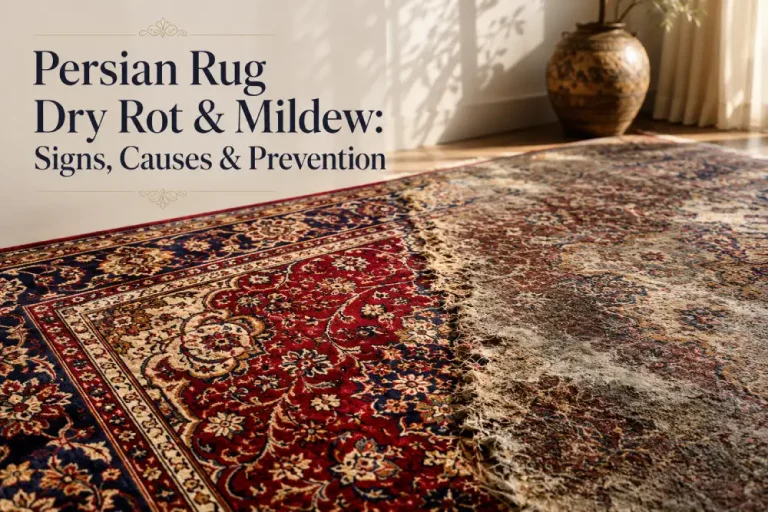
A Persian carpet can last for generations, but only when its fibers and foundation are protected from moisture. One of the most serious threats is Persian rug dry rot, a form of structural deterioration that can make the foundation brittle, weak, and vulnerable to tearing. Mold and mildew can appear much earlier, sometimes beginning with odor, discoloration, or hidden growth on the reverse side.
These problems matter particularly in hand-knotted rugs because wool fibers, silk fibers, cotton foundations, dyes, and other natural fibers can react differently to excessive moisture. A rug may look normal from above while dampness remains trapped underneath, creating conditions for mold spores, mildew growth, and fungal deterioration.
At Shenasi Carpet, careful inspection is especially important after leaks, flooding, improper cleaning, or long periods of high humidity. Identifying rug moisture damage early can improve the chances of successful professional Persian rug cleaning, repair, stabilization, or restoration.
What Are Dry Rot and Mildew in Persian Rugs
Dry rot in rugs does not mean a rug simply became too dry. The term generally describes serious fiber deterioration that often follows prolonged or repeated moisture exposure. As foundation fibers lose strength, a rug may become stiff, brittle, cracked, or unusually fragile. In advanced cases, warp threads can fail when the rug is bent, lifted, or folded.
Mildew in rugs is fungal growth associated with damp conditions, while mold may penetrate deeper into fibers and backing materials. Persian rug mold can appear as spots, fuzzy growth, staining, or color changes, but sometimes the first clue is a persistent musty smell in rug fibers.
Dry Rot vs. Mold vs. Mildew: What’s the Difference
Mold and mildew describe fungal growth, while rug dry rot refers to physical weakening and breakdown. A rug can develop mildew without immediate foundation failure, and it may also retain structural damage after past water exposure even when active mold is no longer obvious.
This distinction affects treatment. Persian rug mold removal focuses on contamination control and safe drying, whereas rug dry rot repair may require structural reinforcement. Antique rug dry rot can be particularly delicate because the weakened foundation may need stabilization before decorative restoration begins.
What Causes Dry Rot and Mildew in Persian Rugs
The main cause is moisture that remains in or beneath a rug long enough to encourage mold, mildew, and fiber deterioration. Sometimes the source is obvious, such as flooding. In other cases, small recurring exposures gradually cause damage.
Common risk factors include:
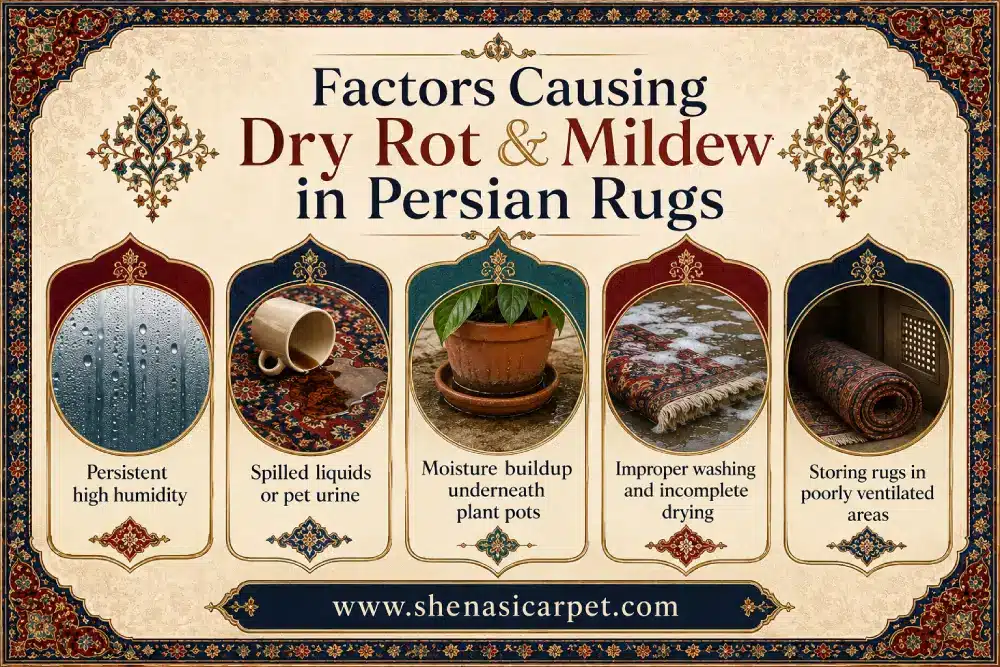
- Persistent high humidity in rooms with limited airflow
- Water from plumbing leaks, flooding, or damp flooring
- Repeated spills or pet accidents that penetrate the rug foundation
- Moisture trapped beneath plant pots or containers
- Improper washing followed by slow or incomplete drying
- Storage in basements, garages, or poorly ventilated spaces
Prolonged Moisture and High Humidity
High humidity and rugs can be a damaging combination when air circulation is poor. Humid rooms may keep natural fibers slightly damp for long periods, particularly in basements or closed rooms. Over time, humidity damage to rugs can contribute to odor, mold, dye instability, and weakening of foundation fibers.
A dehumidifier may help maintain a more stable environment, but recurring dampness should always be investigated rather than merely managed.
Water Leaks, Flooding and Wet Floors
Plumbing leaks, roof leaks, appliance failures, flooding, and wet floors can saturate a rug quickly. Rug water damage becomes more serious when moisture reaches the foundation and the rug remains flat against the floor, slowing evaporation.
Anyone searching for How to Dry a Flooded Carpet Quickly and Effectively should remember that a valuable Persian rug often requires different handling from installed carpeting. Its dyes, fringes, pile, and hand-knotted foundation may need controlled extraction and drying.
Spills and Pet Accidents
A small spill may seem harmless after the surface is blotted, yet moisture can pass through the pile and remain underneath. Pet accidents may also leave residues that affect fibers, dyes, and odor if not properly removed.
Repeatedly soaking a stain with household products can create a localized damp environment. Persistent odor or staining is better evaluated than repeatedly saturated.
Potted Plants Placed Directly on Rugs
Potted plants are a common cause of mold under area rug sections because condensation, overflow, and slow leaks can remain hidden beneath containers for days.
Plant stands and waterproof saucers should sit on a visible hard surface rather than directly on a Persian rug. Even small recurring amounts of water can lead to Persian rug mildew and damage to cotton or other foundation materials.
Improper Cleaning and Slow Drying
Professional rug cleaning depends on controlled washing, rinsing, extraction, and drying methods suitable for the rug’s construction and dyes. Problems arise when a rug is over-wet, inadequately rinsed, or left to dry slowly in weak airflow.
Improper home cleaning can be equally risky. Saturating a wool rug without proper drying conditions may encourage mold on wool rug fibers and can cause dye migration, odor, or texture changes.
Damp or Poorly Ventilated Storage
Persian rug storage should be dry, clean, breathable, and protected from unstable humidity. A rug rolled while slightly damp can trap moisture deep inside, allowing mildew and mold to spread unnoticed.
Non-breathable wrapping may also hold moisture against the fibers. Proper rug storage requires a dry location, breathable protection, and periodic inspection rather than leaving a rug sealed away for years.
How to Identify Dry Rot in a Persian Rug
The most important rug dry rot signs involve changes in strength. A damaged area may feel unusually stiff, brittle, or papery. Cracks can appear when the rug is gently flexed, while weakened foundation yarns may split along folds or worn areas.
Other signs of dry rot in rugs include loose pile, broken warp threads, crumbling foundation fibers, and sections that no longer tolerate normal handling. Fringe and edges may also become fragile if moisture repeatedly reached those areas.
Watch for warning signs such as:
- Brittle, stiff, or unusually fragile sections
- Cracking sounds or visible splitting when the rug is gently handled
- Broken or weakened warp threads
- Loose pile that separates easily from the foundation
- Crumbling fibers on the back of the rug
- Fragile fringes, edges, or previously damp areas
Dry rot is harder to assess in older rugs because ordinary wear can exist alongside moisture-related deterioration. Antique Persian rug restoration should therefore begin with a close examination of the foundation before extensive cleaning or repair. If the structure is severely weakened, even folding or moving the rug can enlarge the damage.
How to Tell If a Persian Rug Has Mold or Mildew
What does mold look like on a rug? It may appear as black, green, white, gray, or brown spotting. Visible mold on rug surfaces can look powdery or fuzzy, while other cases resemble irregular staining. Color alone is not conclusive, so odor and moisture history are also important.
A musty smell Persian rug owners notice after ventilation may indicate trapped moisture or microbial activity. Any rug that has been wet should be checked on both sides, along with the floor beneath it.
Mold Hidden on the Back of the Rug
The back can reveal contamination that is not visible from the pile side. Moisture may become trapped between the rug and a non-breathable floor surface, especially when there is no suitable rug pad or when the floor itself has been damp.
To prevent mold and mildew on rugs, periodically inspect the underside, particularly in basements, humid rooms, or areas with previous leaks. If visible growth is present, avoid vigorous brushing or shaking because this may spread mold spores.
How to Prevent Dry Rot and Mildew in Persian Rugs
Rug mold prevention begins with controlling moisture. Repair plumbing leaks promptly, keep rugs away from known water sources, and never leave a wet rug lying flat. Good airflow and moderate indoor humidity reduce the conditions that encourage mildew growth.
A suitable rug pad can reduce direct contact with a cold floor and support airflow, but the pad itself should be checked after spills or cleaning because water can remain trapped underneath.
To prevent dry rot in rugs, clean spills promptly without oversaturating the fibers and use professional Persian rug cleaning when a larger area becomes wet. Regular inspection is particularly important under furniture, near planters, and in rooms that are rarely used.
Helpful preventive practices include:
- Keep indoor humidity at a stable, moderate level
- Address plumbing leaks and damp flooring as soon as possible
- Blot spills promptly instead of soaking the affected area
- Lift and inspect rugs after any significant water exposure
- Allow adequate airflow around rugs and under furniture
- Check rug pads periodically for trapped moisture
- Use professional rug cleaning when deep cleaning or water extraction is required
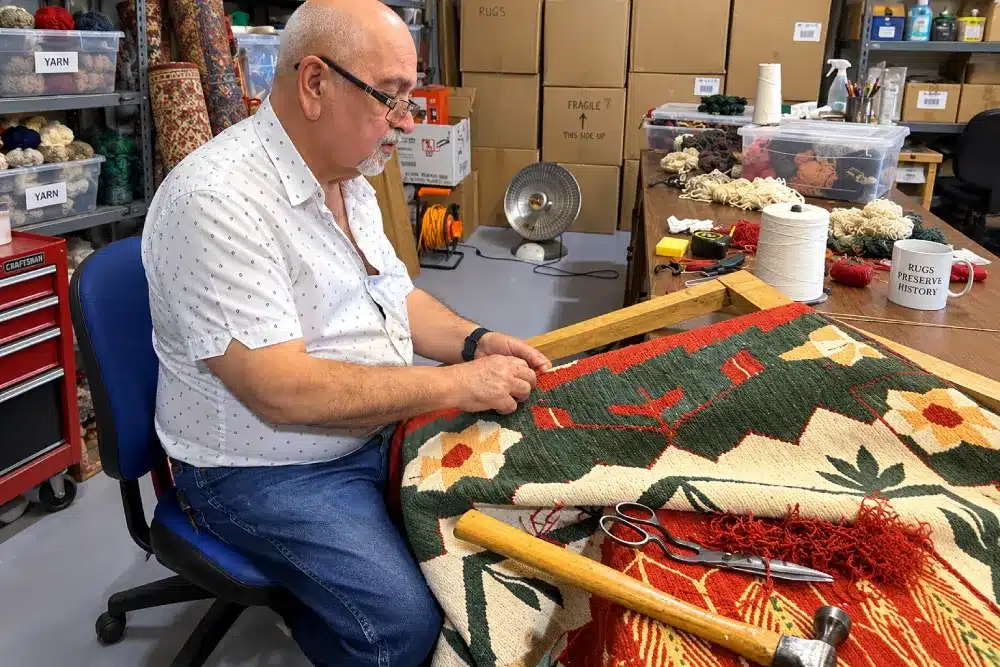
When seeking carpet repair in Vancouver, choose someone familiar with hand-knotted construction rather than general carpet patching alone. Persian rug repair may involve the original foundation, knot structure, fiber type, and dyes.
If you plan to buy modern carpet for a room that is occasionally damp, moisture control still matters. Newer materials may differ, but poor ventilation and trapped water can damage many floor coverings.
How to Store a Persian Rug Without Causing Mold or Dry Rot
Before storage, make sure the rug is fully clean and completely dry. Even slight residual moisture can create a damp environment inside a rolled rug, contributing to mildew in Persian rugs and gradual fiber deterioration.
Roll rather than sharply fold the rug when possible, especially if it is old or delicate. Use breathable protective material, keep the roll away from damp floors, and choose a location with stable temperature and humidity.
Stored rugs should be checked periodically for moisture, odor, pests, and changes in texture. Proper rug storage depends on continued observation, not simply wrapping the rug and leaving it untouched.
What Should You Do If Your Persian Rug Already Has Dry Rot or Mildew
If mold, mildew, or structural weakness is already present, avoid saturating the rug with household cleaners or scrubbing the affected area. Mold removal from rug fibers requires careful handling, thorough drying, and methods suited to the rug’s dyes and materials.
For active contamination, first stop the moisture source and separate the affected rug from other textiles. Persian rug mold removal may involve controlled cleaning, decontamination, drying, and odor treatment depending on the severity of the problem.
Dry rot requires a different approach. Rug dry rot repair may involve localized reinforcement or broader Persian rug restoration in which damaged foundation areas are rebuilt before missing pile is reconstructed. At that stage, the practical question is: Rug Repair vs Replacement? The answer depends on the rug’s age, value, design, degree of foundation failure, and the owner’s goals.
Can a Persian Rug With Dry Rot Be Saved
Sometimes it can. Limited dry rot may be stabilized and repaired, especially when the weakened area is localized. In advanced cases, large parts of the foundation may have lost strength, making restoration more complex.
A professional assessment is important because rough handling can turn a weak area into a tear. Specialists in Persian rug repair can examine the warp, weft, pile, fringes, and surrounding fibers to determine whether restoration is practical.
FAQ
- Does moisture cause dry rot in rugs? Yes. Despite the name, dry rot is commonly associated with previous or prolonged moisture exposure that weakens natural fibers and can lead to fungal deterioration and structural loss.
- How to prevent mold under an area rug? Keep the floor dry, improve ventilation, use an appropriate rug pad, clean spills promptly, and occasionally inspect the underside and floor.
- Can mildew permanently damage a Persian rug? It can if damp conditions continue or fungal growth penetrates the foundation. Early attention may prevent more extensive rug deterioration.
- Should mold on a Persian rug be cleaned at home? Valuable, antique, silk, wool, or heavily contaminated rugs are safer in the hands of a specialist because aggressive chemicals or excess water may create further damage.
- When is professional restoration necessary? Persian rug restoration may be needed when there are broken foundation threads, brittle areas, holes, severe water damage, or recurring mold and mildew affecting structural strength.